
August 06, 2026
If you're comparing decking species and keep landing on IPE, there's a reason it sits at the top of most "best decking" lists rather than just being one option among many. It's genuinely the premium choice in hardwood decking — and understanding why helps you decide whether that premium is worth paying for your specific project.
What IPE actually is
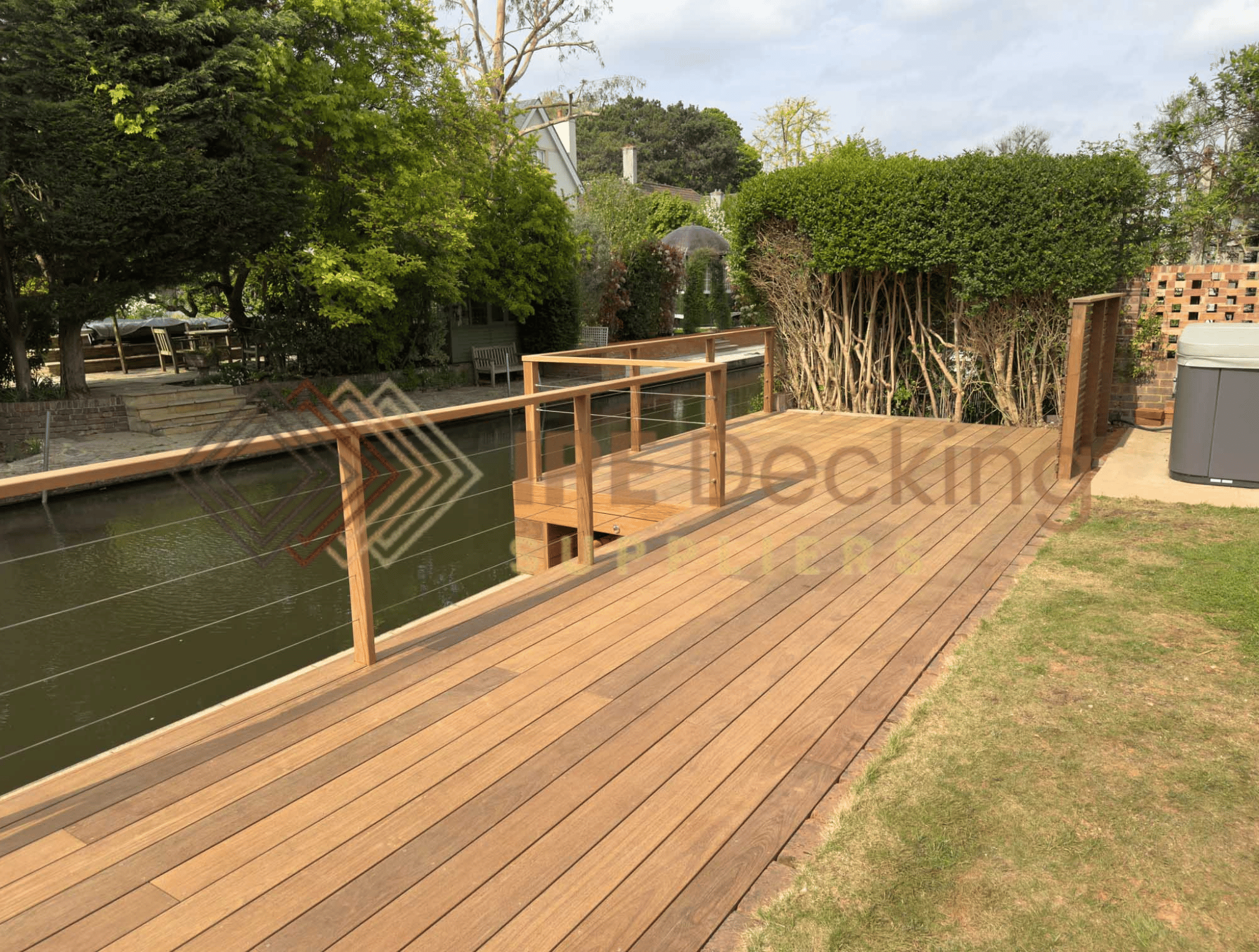
IPE (pronounced "ee-pay") is a dense South American hardwood, sometimes marketed as Brazilian Walnut, prized for exceptional natural durability. It's classed as one of the most durable timbers available for decking — capable of lasting decades outdoors with minimal intervention, which is the main reason it commands a higher price than almost any other decking species on the market.
Its density is genuinely unusual: IPE is so dense it will barely float in water, and that same density is what gives it such strong resistance to rot, insect attack, and general wear. It's also naturally fire-resistant to a degree most timbers aren't, which occasionally matters for commercial specification.
Certification matters here more than with most species
Because IPE is a tropical hardwood harvested from South American forests, sourcing responsibly is a genuinely important consideration, not just a box-ticking exercise. FSC certification confirms the timber comes from forests managed to recognised sustainability standards, with a proper chain of custody from forest to supplier. If a supplier can't confirm FSC certification for IPE specifically, that's worth treating as a serious red flag rather than a minor omission — this is one species where the sourcing question genuinely matters.
Profiles: smooth vs grooved
IPE decking is typically available in two main finishes:
Smooth boards give a refined, furniture-grade finish underfoot — the choice for a more contemporary or higher-end look, particularly where the deck will be walked on barefoot regularly (around a pool, for instance).
Grooved boards are designed to work with hidden/concealed fixing systems, giving a completely clean surface with no visible screw heads. This is increasingly the preferred choice for high-end residential and commercial projects where a seamless finish matters.
Both perform identically in terms of durability — the choice is purely down to the look and fixing method you want.
Weathering and maintenance
Left untreated, IPE weathers to an attractive silver-grey over time, similar to other hardwoods and to Cedar. If you want to maintain its original rich brown tone, it needs an appropriate hardwood decking oil applied periodically — how often depends on sun exposure, but this is genuinely optional rather than necessary for the timber's performance. Unlike softwood decking, skipping the oil doesn't compromise durability, it just changes the colour.
Because IPE is so dense, standard wood screws can be genuinely difficult to drive without pre-drilling — this isn't a minor inconvenience, it's a real installation consideration worth planning for, particularly if you're fitting a large area. Stainless steel fixings are essential, as with any exterior hardwood, both for corrosion resistance and to avoid staining.
Cost: why IPE sits where it does
IPE is genuinely one of the more expensive decking options available, and it's worth being upfront about that rather than downplaying it. You're paying for exceptional longevity and a hardness/durability profile that softer or less dense species simply can't match — for a project where the deck needs to perform for decades with minimal upkeep, that premium is often justified. For a smaller budget or a project with a shorter expected lifespan (a rental property, for instance), a mid-range hardwood like Yellow Balau delivers strong durability at a noticeably lower cost.
Is IPE right for your project?
IPE makes the most sense where you want a genuinely premium, long-lasting deck and are prepared to pay for it — high-end residential projects, commercial spaces, or anywhere the deck needs to perform with minimal maintenance for many years. If budget is the primary constraint, it's worth comparing against Yellow Balau, which offers strong durability at a more accessible price point.
If you're specifying for a project and want help working out board coverage, fixing method, or the smooth vs grooved decision, our team can talk you through it before you order.

General